Adam Fields (weblog)

This blog is a hobby. My main trade is technology strategy, process/project management, and performance optimization consulting, with a focus on enterprise and open source CMS and related technologies. More information.

3/4/2008

Why don’t we have degrees of terrorism?

We have different classifications for the crime of “killing a person”, and those classifications encompass whether it was an accident or not, whether it was premeditated, and how many people were killed - e.g.: How serious a crime has actually been committed. But when we talk about terrorism, it’s always just “terrorism”. This results in the really sinister megacriminals being lumped in with the group of morons that can’t get it to together to leave the house without forgetting to wear pants, let alone actually arrange to blow anything up.

Most “terrorists” are less dangerous than your average serial killer or bus accident, but we still lump them all together simply because they have an agenda.

Similar to murder, I think we need some sort of classification system for these crimes:

  1. Intent to commit terrorism: you “plotted” with someone who may or may not have been an undercover cop, but didn’t actually acquire passports or learn how to make liquid explosives
  2. Manfrightening: you committed some other crime, and along the way someone got scared and called you a terrorist, but you have no stated agenda.
  3. Terrorism in the third degree: You actually blew up something, but no one was hurt.
  4. Terrorism in the second degree: You actually blew up something and killed some people, but failed to garner any sympathy from the public.
  5. Terrorism in the first degree: You actually blew up something, lots of people were killed, and the US declared war on some country you were unaffiliated with.

Tags: , ,


5/1/2007

Circo Hazardous Sock Packaging

Filed under: — adam @ 2:27 pm

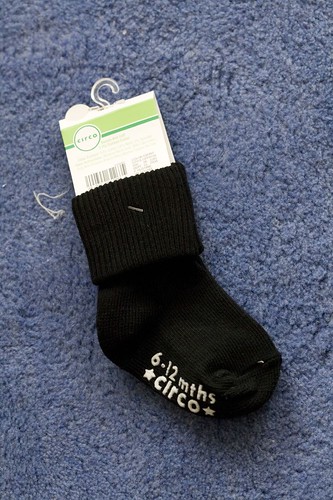
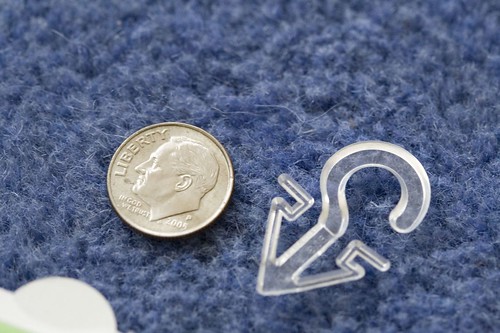
I happened to take my 6-month old to Target this weekend, and we bought him some socks. He was playing with the package and put them in his mouth, and managed to get the little hanger plastic piece out. There’s certainly enough to say about parental responsibility, and not letting the baby get into dangerous things, but until this little plastic piece disappeared (it turns out he dropped it on the floor), we didn’t even give a second thought to the idea that a pair of socks for a 6-12 month old might contain this kind of incredible choking hazard. I’m normally pretty paranoid about this. Didn’t these things used to go all the way across? Is this REALLY the place where Target wants to save a tenth of a cent of plastic? It seems like a lawsuit waiting to happen.

Be careful out there…

Circo Socks Hazardous Packaging

Circo Socks Hazardous Packaging

Circo Socks Hazardous Packaging

Circo Socks Hazardous Packaging

Tags: , , , ,


4/14/2007

Google has just bought a lot of browsing history of the internet

I pointed out that YouTube was a particularly valuable acquisition to Google because their videos are the most embedded in other pages of any of the online video services. When you embed your own content in someone else’s web page, you get the ability to track who visits that page and when, to the extent that you can identify them. This is how Google Analytics works - there’s a small piece of javascript loaded into the page which is served from one of Google’s servers, and then everytime someone hits that page, they get the IP address, the URL of the referring page, and whatever cookies are stored with the browser for the domain. As I’ve discussed before, this is often more than enough information to uniquely identify a person with pretty high accuracy.

DoubleClick has been doing this for a lot longer than Google has, and they have a lot of history there. In addition to their ad network, Google has also just acquired that entire browsing history, profiles of the browsing of a huge chunk of the web. Google’s privacy policy does not seem to apply to information acquired from sources other than Google.com, so they’re probably free to do whatever they want with this profile data.

[Update: In perusing their privacy policy, I noted this: If Google becomes involved in a merger, acquisition, or any form of sale of some or all of its assets, we will provide notice before personal information is transferred and becomes subject to a different privacy policy. This doesn't specify which end of the merger they're on, so maybe this does cover personal information they acquire. I wonder if they're planning on informing everyone included in the DoubleClick database.]

Tags: , , ,


Remember when DoubleClick was pretty universally reviled and sued for privacy violations a few years back?

Oh yeah.

http://www.nytimes.com/2007/04/14/technology/14deal.html?ex=1334203200&en=d94eb7f788b32db5&ei=5090&partner=rssuserland&emc=rss


3/16/2007

ISPs apparently sell your clickstream data

Apparently, “anonymized” clickstream data (the urls of which websites you visited and in what order) is available for sale directly from many ISPs. There is no way that this is sufficiently anonymized. It is readily obvious from reading my clickstream who I am - urls for MANY online services contain usernames, and anyone who uses any sort of online service is almost certainly visiting their own presence far more than anything else. All it takes is one of those usernames to be tied to a real name, and your entire clickstream becomes un-anonymized, irreversibly and forever.

I’ve talked about the dangers of breaking anonymization with leaking keys before:

Short answer: It is not enough to say that a piece of data is not “personally identifiable” if it is unique and exists with a piece of personally identifiable data somewhere else. More importantly, it doesn’t even have to be unique or completely personally identifiable - whether or not you can guess who a person is from a piece of data is not a black and white distinction, and simply being able to guess who a person might be can leak some information that might confirm their identity when combined with something else.

This is also completely setting aside the fact that you have very little direct control over much of your clickstream, since there are all sorts of ways for a site you visit to get your browser to load things - popups, javascript includes, and images being the most prevalent.

Preserving anonymity is hard. This is an egregious breach of privacy. Expect lawsuits if this is true.

http://internet.seekingalpha.com/article/29449

Tags: , , ,


3/14/2007

Google to purge some data after 18-24 months

Filed under: — adam @ 6:33 pm

Well, that’s a nice start. Good for them.

http://blog.wired.com/27bstroke6/2007/03/google_to_anony.html

http://googleblog.blogspot.com/2007/03/taking-steps-to-further-improve-our.html

http://216.239.57.110/blog_resources/google_log_retention_policy_faq.pdf

Tags: , ,


10/15/2006

Privacy is about access, not secrecy

There’s a very important point to be made here.

Privacy in the digital age is not necessarily about secrecy, it’s about access. The question is no longer whether someone can know a piece of information, but also how easy it is to find.

If you take a bunch of available information and aggregate it to make it easily accessible, that’s arguably a worse privacy violation than taking a secret piece of information and making it “public” but putting it where no one can find it (or where they have to go looking for it).

This is a very important disctinction when you’re looking at corporate log gathering and data harvesting. Sure - your IP address or your phone number may be “public information”, but it’s still a privacy violation when it’s put in a big database with a bunch of other information about you and given to someone.

Tags: , , ,


10/10/2006

Google has your logs (and all it took was a fart lighting video)

The non-obvious side of Google’s purchase of YouTube: Google now has access to the hit logs of every page that a YouTube video appears on, including LOTS of pages that were probably previously inaccessible to them. MySpace pages were probably going to get Google ads anyway, because of the big deal that happened there, but many others weren’t.

Add this to AdSense, the Google Web Accelerator, Google Web Analytics, and Google Maps, and that’s a lot of data being collected about browsing habits, and the number of sites you can browse without sending some data to Google has just dropped significantly.

Previously:

http://www.aquick.org/blog/2006/02/03/detailed-survey-of-verbatim-answers-from-aol-ms-yahoo-and-google-about-what-details-they-store/

http://www.aquick.org/blog/2006/01/30/flickr-pictures-web-beacons-and-a-modest-proposal/

http://www.aquick.org/blog/2006/01/29/whats-the-big-fuss-about-ip-addresses/

http://www.aquick.org/blog/2006/01/27/google-does-keep-cookie-and-ip-correlated-logs/

http://www.aquick.org/blog/2006/01/26/does-google-keep-logs-of-personal-data/

http://www.aquick.org/blog/2005/11/21/google-really-wants-your-logs/

http://www.aquick.org/blog/2005/05/05/google-wants-your-logs/

http://www.aquick.org/blog/index.php?s=google&submit=Search

Tags: , , ,


9/17/2006

Amazon Unbox is a travesty

I was going to write something about this, but Cory beat me to it.

http://www.boingboing.net/2006/09/15/amazon_unbox_to_cust.html

Amazon Unbox has the worst terms of service I’ve seen in a long time. Like Cory, I’m a longtime Amazon supporter, and I think their customer service is outstanding, and this is a travesty. Way to fuck over the people who won’t actually read the terms because they just want to download a movie.

I only really have one thing to add with respect to the “if it has value then we have a right to charge money for it” proposition. Does the MPAA reserve the right to charge more retroactively if you enjoy a movie more than you expected to? That’s hidden value, right? This madness has to stop.

Mr. Bezos, you should be ashamed of yourself, and also whoever you put in charge of this.

Tags: , , , ,


8/25/2006

Doing what the terrorists want

I’ve often said that terrorism is an auto-immune disease afflicting civilization. Bruce Schneier has a great article up about how responding to terrorism by locking things down is, in fact, exactly what the terrorists want.

http://www.schneier.com/blog/archives/2006/08/what_the_terror.html

Tags: , , , ,


8/7/2006

AOL releases “anonymized” search data for 500k users

This is a serious breach of user privacy, and I can’t imagine there won’t be lawsuits over this.

Either they didn’t think this through, or this is the best way they could think of to raise a public outrage.

http://www.interesting-people.org/archives/interesting-people/200608/msg00027.html

Tags: , ,


8/3/2006

This is a great video of the ZDNet Executive Editor explaining what’s wrong with DRM.

http://www.youtube.com/watch?v=YKI_w_VBoTQ&search=d.r.m.%20crap

Tags: , ,


6/16/2006

Google Government search

I think it’s simultaneously good that Google is turning a watchful eye on the government, but also somewhat creepy that they’re putting themselves in the position of proxying people’s access to potentially sensitive information. I do NOT think that the Google privacy policy is sufficient to cover this situation.

As many have predicted, this is also likely to expose some interesting accidentally unprotected things at some point in the future.

http://www.google.com/ig/usgov

Tags: , , ,


6/4/2006

The motivations of wiretapping

Boingboing points out this Wired article about a reporter who crashed a conference of wiretapping providers, mentioning this quotation in particular:

‘He sneered again. “Do you think for a minute that Bush would let legal issues stop him from doing surveillance? He’s got to prevent a terrorist attack that everyone knows is coming. He’ll do absolutely anything he thinks is going to work. And so would you. So why are you bothering these guys?”‘

It’s an interesting read, but I fundamentally disagree with the above statement, and this is the problem.

It’s not the surveillance that bothers me, it’s the resistance to oversight, even after the fact.

If there was any confidence that what they were doing was a reasonable tradeoff, they wouldn’t have to a) lie or b) break the law to do it. Yet they’ve done both of these things.

If the law enforcement community said “well shit, we’re out of ideas about how to stop these people, and so we really need to have our computers read everyone’s email and tap everyone’s phones and we guarantee that this information won’t be used for anything else, and anyone we find doing something nefarious will be dealt with according to due process”, then we could, you know, engage in a meaningful discussion about this. And then we could move on to the fact that “terrorist” is not a useful designation for a criminal, and then maybe we could fire the people who thought up this brilliant idea and find someone who would practice actual security because wholesale surveillance and profiling have been widely debunked as largely useless for anything besides persecution, political attacks, and invasions of privacy.

But we won’t, because that’s not what this is about.

This opinion of a member of the Dutch National Police is particularly telling:

‘He said that in the Netherlands, communications intercept capabilities are advanced and well established, and yet, in practice, less problematic than in many other countries. “Our legal system is more transparent,” he said, “so we can do what we need to do without controversy. Transparency makes law enforcement easier, not more difficult.”

The technology exists, it’s not going away, and it’s really not the problem. The secrecy is the problem.

http://www.wired.com/news/technology/1,71022-1.html

Tags: , , ,


5/19/2006

Privacy without hiding

Filed under: — adam @ 8:57 am

Excellent article from Bruce Schneier on why privacy is important, even if “you have nothing to hide”.

‘We do nothing wrong when we make love or go to the bathroom. We are not deliberately hiding anything when we seek out private places for reflection or conversation. We keep private journals, sing in the privacy of the shower, and write letters to secret lovers and then burn them. Privacy is a basic human need.’

http://www.wired.com/news/columns/1,70886-0.html

Privacy is freedom. It is freedom from judgement, the freedom to stew in our own individual cognitive juices, the freedom to express and learn and argue.

Tags: , ,


5/11/2006

New “security glitch” found in Diebold voting systems

Filed under: — adam @ 9:08 am

“Elections officials in several states are scrambling to understand and limit the risk from a “dangerous” security hole found in Diebold Election Systems Inc.’s ATM-like touch-screen voting machines.

The hole is considered more worrisome than most security problems discovered on modern voting machines, such as weak encryption, easily pickable locks and use of the same, weak password nationwide.”

Perhaps it’s time to acknowledge that the Diebold systems themselves ARE the security glitch.

http://www.insidebayarea.com/ci_3805089

Tags: , ,


4/30/2006

US Mandatory Data Retention laws are coming

Filed under: — adam @ 9:35 am

Remember the privacy implications of the government asking Google for search data? (http://www.aquick.org/blog/2006/01/19/doj-demands-large-chunk-of-google-data/)

It’s going to get worse before it gets better. No online service considers your IP address to be private information, and now they will be required to maintain logs mapping your IP address to real contact information, for a period of at least one year after your account is closed.

The only way to prevent this information from being misused is to not keep it, and now there won’t be any choice.

http://www.interesting-people.org/archives/interesting-people/200604/msg00176.html

I’ve discussed this before:

http://www.aquick.org/blog/2006/01/29/whats-the-big-fuss-about-ip-addresses/

Tags: , ,


4/6/2006

Watch out for the, uh, oven door scam

Apparently, crooks have been breaking into vacation homes, stealing the >OVEN DOORS<, repackaging them in real flat screen TV boxes, and selling them to dupes on the street.

Words fail me.

http://www.consumerist.com/consumer/consumer-alert/dont-take-any-wooden-flat-screens-165345.php
http://www.consumerist.com/consumer/scam/update-dont-take-any-wooden-flat-screens-165526.php

Tags: , , , ,


MIT student told to drop out of school by the RIAA to pay settlement fines

http://www-tech.mit.edu/V126/N15/RIAA1506.html

Of course, this is nothing compared to the fact that the RIAA says you shouldn’t be allowed to break DRM even if it’s going to kill you if you don’t:

http://www.freedom-to-tinker.com/?p=984

I’ve discussed this before:

http://www.aquick.org/blog/2005/08/01/why-i-oppose-drm/

Tags: , , , ,


3/20/2006

Hidden dangers for consumers - Trojan Technologies

I’ve been collecting examples of cases where there are hidden dangers facing consumers, cases where the information necessary to make an informed decision about a product isn’t obvious, or isn’t included in most of the dialogue about that product. Sometimes, this deals with hidden implications under the law, but sometimes it’s about non-obvious capabilities of technology.

We’re increasingly entering situations where most customers simply can’t decide whether a certain product makes sense without lots of background knowledge about copyright law, evidence law, network effects, and so on. Things are complicated.

So far, I have come up with these examples, which would seem to be unrelated, but there’s a common thread - they’re all bad for the end user in non-obvious ways. They all seem safe on the surface, and often, importantly, they seem just like other approaches that are actually better, but they’re carrying hidden payloads - call them “Trojan technologies”.

To put it clearly, what I’m talking about are the cases where there are two different approaches to a technology, where the two are functionally equivalent and indistinguishable to the end user, but with vastly different implications for the various kinds of backend users or uses. Sometimes, the differences may not be evident until much later. In many circumstances, the differences may not ever materialize. But that doesn’t mean that they aren’t there.

  • Remote data storage. I wrote a previous post about this, and Kevin Bankston of the EFF has some great comments on it. Essentially, the problem is this. To the end user, it doesn’t matter where you store your files, and the value proposition looks like a tradeoff between having remote access to your own files or not being able to get at them easily because they’re on your desktop. But to a lawyer asking for those files, it makes a gigantic difference in whether they’re under your direct control or not. On your home computer, a search warrant would be required to obtain them, but on a remote server, only a subpoena is needed.
  • The recent debit card exploit has shed some light on the obvious vulnerabilities in that system, and it’s basically the same case. To a consumer, using a debit card looks exactly the same as using a credit card. But the legal ramifications are very different, and their use is protected by different sets of laws. Credit card liability is typically geared in favor of the consumer - if your card is subject to fraud, there’s a maximum amount you’ll end up being liable for, and your account will be credited immediately, as you simply don’t owe the money you didn’t charge yourself. Using a debit card, the money is deducted from your account immediately, and you have to wait for the investigation to be completed before you get your refund. A lot of people recently discovered this the hard way. There’s a tremendous amount of good coverage of debit card fraud on the Consumerist blog.
  • The Goodmail system, being adopted by Yahoo and AOL, is a bit more innocuous on the surface, but it ties into the same question. On the face of it, it seems like not a terrible idea - charge senders for guaranteed delivery of email. But the very idea carries with it, outside of the normal dialogue, the implications of breaking network neutrality (the concept that all traffic gets equal treatment on the public internet) that extend into a huge debate being raged in the confines of the networking community and the government, over such things as VoIP systems, Google traffic, and all kinds of other issues. I’m not sure if this really qualifies in the same league as my other examples, but I wanted to mention it here anyway. There’s a goodmail/network neutrality overview discussion going on over on Brad Templeton’s blog.
  • DRM is sort of the most obvious. Consumers can’t tell what the hidden implications of DRM are. This is partly because those limitations are subject to change, and that in itself is a big part of the problem. The litany of complaints is long - DRM systems destroy fair use, they’re security risks, they make things complicated for the user. I’ve written a lot about DRM in the past year and a half.
  • 911 service on VoIP is my last big example, and one of the first ones that got me started down this path. This previous post, dealing with the differences between multiple kinds of services called “911 service” on different networks, is actually a good introduction to this whole problem. I ask again ‘Does my grandmother really understand the distinction between a full-service 911 center and a “Public Safety Answering Point”? Should she have to, in order to get a phone where people will come when she dials 911?

I don’t have a good solution to this, beyond more education. This facet must be part of the consumer debate over new technologies and services. These differences are important. We need to start being aware, and asking the right questions. Not “what are we getting out of this new technology?“, but “what are we giving up?“.

Tags: , , , , , , , , , ,


3/15/2006

Claim your settlement from Sony

If you bought an infected CD from Sony, you’re entitled to some benefits under the lawsuit settlement:

http://www.eff.org/sony

Tags: , , , , ,


Zfone is simple encrypted voip telephony

Filed under: — adam @ 9:30 am

Phil Zimmermann, the guy who brought you PGP, has just released a public beta of his new open source encrypted VOIP software - Zfone. The beta is Mac/linux only, the Windows version will be out in a month or so.

It’s an encrypting proxy for SIP calls using pre-existing software. I don’t know enough about how the protocol works to say if this would work with things like Vonage or not.

“In the future, the Zfone protocol will be integrated into standalone secure VoIP clients, but today we have a software product that lets you turn your existing VoIP client into a secure phone. The current Zfone software runs in the Internet Protocol stack on any Windows XP, Mac OS X, or Linux PC, and intercepts and filters all the VoIP packets as they go in and out of the machine, and secures the call on the fly. You can use a variety of different software VoIP clients to make a VoIP call. The Zfone software detects when the call starts, and initiates a cryptographic key agreement between the two parties, and then proceeds to encrypt and decrypt the voice packets on the fly. It has its own little separate GUI, telling the user if the call is secure.”

Zfone has been tested with these VoIP clients and VoIP services:
VoIP clients: X-Lite, Gizmo, and SJphone.
VoIP service providers: Free World Dialup, iptel.org, and SIPphone.

http://www.philzimmermann.com/EN/zfone/index.html

Tags: , , , , ,


3/14/2006

Google forced to release records by the court

As predicted, U.S. Judge James Ware intends to force Google to hand over the requested data to the DoJ.

http://www.cnn.com/2006/TECH/internet/03/14/google.hearing.ap/index.html

Tags: , , , ,


3/6/2006

Massive fraud alert on Citibank ATMs

Filed under: — adam @ 4:17 pm

Some kind of massive fuckup is going on with the international ATM network, possibly a class break of the interbank ATM network. Lots of conflicting information, but it’s pretty clear that things are not going well:

http://www.consumerist.com/consumer/atms/massive-citibank-alert-update-158628.php

Tags: , , , ,


3/2/2006

Outrage fatigue roundup 3/2/2006

The big news this week - video that Bush knew that Katrina would destroy New Orleans a day before the storm hit:
http://www.truthout.org/multimedia.htm
http://websrvr20.audiovideoweb.com/avwebdswebsrvr2143/news_video/apbushkatrina512K.mov

Asking for complaint forms in Flordia Police stations gets you harassed and threatened:
http://cbs4.com/topstories/local_story_033170755.html

Greek cell phone taps of high officials were enabled by embedded surveillance tech:
http://www.schneier.com/blog/archives/2006/03/more_on_greek_w.html

Zogby poll shows 72% of troops want to get out of Iraq in the next year, but also that 85% of them think they’re there to retaliate for Saddam’s attacking us on 9/11. So, there’s that:
http://www.estripes.com/article.asp?section=104&article=35385

Human rights abuses in Iraq are worse than under Saddam (oops, Freudian slip - I typed Bush there first):
http://www.chron.com/disp/story.mpl/ap/world/3696105.html

Daily Kos is mumbling something about State-initiated impeachment:
http://www.dailykos.com/story/2006/3/1/235828/9378

And, a kitten:
http://www.dailykitten.com/archives/340-Poppy.html

Tags: , , ,


Greek wiretaps were enabled by embedded spy code

Power, once given, will be abused. And not necessarily by those it’s given to.

Bruce Schenier has a blog entry about the Greek cell phone tapping scandal - about 100 cell phones of politicians and officials, including the American embassy, have been tapped by an unknown party since the 2004 Olympics.

Bruce points out that the “malicious code” used to enable this was actually designed into the system as an eavesdropping mechanism for the police.

“There is an important security lesson here. I have long argued that when you build surveillance mechanisms into communication systems, you invite the bad guys to use those mechanisms for their own purposes. That’s exactly what happened here.”

http://www.schneier.com/blog/archives/2006/03/more_on_greek_w.html

Tags: , , , ,


2/22/2006

This is what we mean by abuse of databases

Okay, here it is, folks.

When someone asks “what’s wrong with companies compiling huge databases of personal information?”, this is part of the answer:

http://www.boingboing.net/2006/02/18/miller_hunts_down_pe.html
http://spamkings.oreilly.com/archives/2006/02/inside_the_creepy_miller_brewi.html

Someone signed up for a Miller Brewery contest using a throwaway email address, and they tracked her down and signed up her “real” email address. The second link above concludes that they did it by using information collected by Equifax’s direct mail division, Naviant (which was supposed to have been shut down years ago). They own the domain from which the email was sent.

When we talk about privacy, it can mean a number of things. But indisputably, one of the definitions is “the right to be free from unauthorized intrusions”.

Maybe this is a small thing, but it’s a terrible precedent.

This person obviously didn’t want to be permanently signed up for messages from Miller. Letting an address expire is probably the ultimate form of “opt-out”. Yet, Miller thought it was okay to use personal information gleaned from who-knows-what sources to tie her to another email address, and send her more spam. Would they do the same thing if you changed your phone number to avoid telemarketers? What else is fair game?

Tags: , , , , , ,