Adam Fields (weblog)

This blog is a hobby. My main trade is technology strategy, process/project management, and performance optimization consulting, with a focus on enterprise and open source CMS and related technologies. More information.

3/24/2008

Coming to a Rational First Sale Doctrine for Digital Works

In reference to this Gizmodo piece analyzing the rights granted by the Kindle and Sony e-reader:

http://gizmodo.com/369235/amazon-kindle-and-sony-reader-locked-up-why-your-books-are-no-longer-yours

I think the analysis in that article is flawed. It doesn’t make any sense to be able to resell the reader with the books on it, because the license for the books is assigned to you, not to the reader. For example, if your Kindle breaks, you can move your books to another one. I’ve never heard anything other than the opinion that you can’t resell the digital copy - the assumption has always been that these sorts of transactions break the first sale doctrine. The problem then becomes “what are you buying?”, if there’s nothing you can resell.

The first sale doctrine has to apply to the license, not the bits themselves, because under the scenario in which it applies to the bits, arguably Amazon retains no rights whatsoever. They had no direct hand in arranging the bits of your copy the way they are - they merely sent instructions to your computer about how to arrange them in a certain pattern. The article asserts that you can’t “transfer” the bits, but in the same way, in downloading a copy, Amazon hasn’t actually “transferred” anything to you, either.

There’s no reason you shouldn’t be able to sell your Kindle, and the books don’t necessarily go with it, but if you want to sell the books separately, you can do that too. Legally, if you do that, you’d be obligated to destroy all of the copies you’ve made. Amazon’s inability to police that is as relevant as their inability to police the fact that you haven’t made a photocopy of the physical book you sold when you were done with it. There’s no weight to the argument that this will encourage rampant piracy, given that unencrypted cracked copies of all of these things are available to those who want them anyway, and always will be. People comply with reasonable laws willingly because they’re honest, it’s the “right thing to do”, and they feel that the laws are an acceptable tradeoff for living in a civilized society where sometimes you have to make compromises and not just do whatever you want. People do not comply with one-sided laws where they feel like they’re being ripped off for no reason. A law which turns your sale into a non-sellable license is of the latter kind. It turns normal users into petty criminals who don’t care when they break the law, because the law is stupid. Once they’ve ignored some of the terms, it’s a shorter step to ignore others, or ignore similar terms for other products. People like consistency, especially in legal treatments. I would argue that it’s in Amazon’s interest (and the others) to not niggle on this point, because a reasonable license with terms that look like a sale makes for happier customers who aren’t interested in trodding on the license terms, and that’s better for everyone.

(Yes, I’m arguing that restrictive license “sales” are anti-civilization.)

The Kindle ToS not only prohibits selling the Kindle with your books on it, it prohibits anyone else from even looking at it. If someone reads over your shoulder on the train, you’re in violation.

This is, of course, ridiculous.

The right legal response here seems to me to be to not dicker about with splitting hairs about whether you can sell your digital copies if they’re on a physical device and you can’t if they’re not, but to declare that anything sufficiently close to a “right to view, use, and display [...] an unlimited number of times” de facto consitutes a sale, and with it comes certain buyer’s rights regardless of what kinds of outrageous restrictions the licensor tries to bundle in the ToS. The fact that this also seems to be the right business response reinforces my belief that this is the correct path. This kind of a transaction is different from renting, which is by nature a temporary one.

It is the right thing for society to declare that if you’ve bought something that isn’t time or use limited, you’ve therefore also bought the right to resell it, whether it’s a physical object or a license.

Previously:

http://www.aquick.org/blog/2006/04/30/sony-cant-make-up-its-mind-if-music-is-sold-or-licensed/

http://www.aquick.org/blog/2004/12/30/cory-rants-on-drm-and-rightly-so/

Tags: , , , , , , , , ,


3/3/2008

Fed up with food labeling

Filed under: — adam @ 10:59 am

Our food labeling standards are completely out of whack.

As an example, let’s take “100% fruit juice”. I’m pretty sure that at some point, “100% fruit juice” meant that what you got in the bottle was, prior to being put in the bottle, a piece of fruit that was crushed and maybe filtered. I’m 100% sure that that’s what most people still expect when they buy something that’s labeled “100% fruit juice”.

Except that’s not what you get anymore. Now, it’s reconstituted from concentrates, mixed from different kinds of fruit juice concentrates (which may have vastly different nutritional profiles), and blended into whatever they like, but it’s still the healthy choice kids, because it’s 100% fruit juice!

Right off the labels:

—-
Kedem concord grape juice (which, incidentally, is among the sweetest of the grapes):

The label says “100% fruit juice”.

Ingredients: Grape Juice, Potassium Metabisulfite Added To Enhance Freshness.

It has 150 calories per 8oz.

—-
Welch’s grape juice:

The label says “100% grape juice”.

Ingredients: Grape Juice From Concentrate (Water, Grape Juice Concentrate), Grape Juice, Ascorbic Acid (Vitamin C), No Artificial Flavors Or Colors Added.

It has 170 calories per 8 oz.

—-

They’re not using grapes that have 13% more sugar in them, they’re dickering with the proportions to make their juice sweeter.

This is just one particularly egregious example, but it’s all over the place - many “100% juices” are sweetened with cherry juice or other concentrates. It’s a complete sham. Even the Kedem is pushing it because it’s got preservatives, but at least the juice is actual juice. No way does that Welch’s bottle contain “100% juice”.

Our food labels don’t mean what they say anymore, they have very detailed technical specifications to go with them, and it’s impossible to know what they mean from common sense without understanding those specifications. This isn’t even about making dubious health claims - it’s about defining away the actual contents of the package.

Tags: , , , ,


1/15/2008

Disappointed in the Macworld Keynote

Filed under: — adam @ 4:54 pm

I’ve become a huge Apple fan over the past two years. I think they’ve done a number of wonderful things for desktop computing interfaces, and they’ve far surpassed Windows in usability, stability, and general pleasantness. I spend a lot of time in front of computers, and I try to make as much of it as possible in front of a Mac.

But I’m disappointed with a number of items in today’s keynote.

The Macbook Air is certainly pretty, but when you look at the limitations, who’s this really aimed at? No firewire, only 2GB ram, 4200rpm disk - this rules out mobile creatives. No replaceable battery - this rules out actual mobile executives. It seems to be an upgrade for the regular Macbook users - mobile browsing, email, writing, maybe a little video and music, but it’s far too expensive for that. So, I don’t get it - who’s this aimed at?

I can understand that new hardware sometimes makes old hardware obsolete. But a few of the “hardware upgrades” announced here are really software upgrades in disguise, but which nonetheless are forcing you to buy new hardware to take advantage of the new features. The Time Capsule looks good, but it’s really just an Airport Extreme with an internal disk. Why isn’t this feature available on existing Airport Extremes with external disks?

Note to Apple: your existing customers generally love you. They love you even more when you go the extra mile and suddenly update the stuff they’ve already bought with new capabilities. This makes them more likely to buy new stuff, not less, and even much more likely to recommend that to all of their friends. Are you really going to sell enough $299 Time Capsules to make up for the hate you just scored with everyone who uses an Airport Extreme with an external disk and wants to back up their laptop to it, who now think you’re being greedy and trying to force a $300 upgrade for no reason?

Same deal with the multitouch gestures on the Macbook Air - why aren’t they being backported to the existing Macbook line? The trackpads are multi-touch capable, and this is a software update, to applications that are already running on those machines.

And then there’s the actual software update for the iPod Touch. I’m the last person to say that all software should be free (free software should be free, but that’s a discussion for another day), but these are people who just a few months ago paid a premium to buy your top of the line product, and now you’re fleecing them for a bit of extra cash.

I don’t expect a world-shattering new product line every year, but these “announcements” look like the actions of a company that’s scrambling, not one that’s innovating.

[ Followup: Some suggestions for what I wanted to see instead. ]

Tags: , , ,


10/4/2007

Dear Netflix

Dear Netflix:

I would very much like your website to stop redirecting me to a page that tells me that Im using an unsupported browser. I know I use Opera. I like it. I understand if you dont want to support it, but at least set a cookie so I can just tell you once that I dont care, instead of making me click through your tedious “only browsers we like are supported” splash page every time I want to check my queue.

Thanks. Have a wonderful day.

Tags: , , ,


9/28/2007

The HD format war is lost by existing

[I've posted this as a comment on a few HD DVD vs. Blu-ray blog posts elsewhere, so I thought I'd put it up here as well.]

An HD format war is simply the height of stupidity, given the nice example of how quickly DVD was adopted by… everybody.

This happened for a few reasons, none of which are being replicated by the HD formats/players:

1) One alternative with no difficult competing choices.

2) Fit into existing home theater setups easily.

3) Clear, obvious quality advantages, even if you set it up incorrectly.

4) Significant convenience advantages - pause with no quality loss (anyone here remember VHS tracking?!), random access, extra features, multiple languages, etc…

5) More convenient and durable physical medium.

So - let’s look at what HD formats offer over DVD in these areas:

1) Multiple competing incompatible choices. Not just between HD DVD and Blu-ray, but also between different HD formats. 720p/1080i vs. 1080p, HDMI/HDCP vs. component. People aren’t adopting HD formats because they’re confusing.

2) Does not fit into existing home theater setups easily. If you had a DVD home theater, chances are you’re replacing most, if not all of your components to get to HD - you need a new TV/projector, you probably need some new switches, you need all new cabling, and you need at least three new players to do it right (HD DVD, Blu-ray, and an upscaling DVD player so your old DVDs look good). Not to mention a new programmable remote to control the now 7 or more components in your new setup (receiver, projector/tv, 3 players, HDMI switch, audio/component switch).

3) Clear, obvious quality advantages, but only if properly tuned and all of them work properly together. I can easily tell the difference between even HD movies and upscaled DVD movies. Upscaled DVD movies look fantastic, but HD movies really pop off the screen. But if things aren’t properly configured or you’re using the wrong cabling, these advantages disappear.

4) No significant convenience advantages, with some disadvantages. Pretty much the same extras, but most discs now won’t let you resume playback from the same place if you press stop in the middle, and they make you watch the warnings and splash screens again.

5) Indistinguishable physical medium. Maybe the Blu-ray coating helps, but we’ll see about that.

I’ve gone the HD route, because I really care about very high video quality, and I love tinkering with this stuff. Most people don’t, and find it incredibly confusing and expensive.

Is it really any wonder that people are holding off?

The HD format war is already lost, by existing at all, and every day that both formats are available for sale just makes things worse. The only good way out of it is to erase the distinction between the two formats - dual format players that reach the killer price point and aren’t filled with bugs.

Tags: , , ,


7/5/2007

Will the iPhone experience be as good when winter rolls around?

Filed under: — adam @ 9:35 am

It seems to be a serious problem for those who live in places where it’s not warm all the time that the iPhone will be completely unusable while wearing gloves.

Tags: , , , ,


6/19/2007

I have been stunned into submission by Marc Andreessen’s new blog

Filed under: — adam @ 4:49 pm

It is simply great. Post after post is just captivating, interesting, and relevant if you have anything to do with tech these days.

Go read that for a while:

http://blog.pmarca.com

Tags: , ,


5/10/2007

Brilliant DMCA side effect

Crappy DRM company says the DMCA forces you to buy their technology instead of building your own because not buying their technology is a circumvention of an effective copyright tool.

The thing is, I think they’re right. I mean, it’s stupid, but then so is the DMCA.

There are some other provisions (which seem to not apply), but the crux of it is:

“No person shall manufacture, import, offer to the public, provide, or otherwise traffic in any technology, product, service, device, component, or part thereof, that–

`(A) is primarily designed or produced for the purpose of
circumventing a technological measure that effectively
controls access to a work protected under this title;”

It explicitly does NOT say “copy the work”, it says “circumvent the technology”. “Circumvent” is not the word they were looking for.

In fact, now that I think about it, convincing someone that DRM is bad is also a violation, as that may be interpreted as offering a service that is primarily design for the purpose of circumventing technological protection. Crap.

http://www.forbes.com/business/feeds/afx/2007/05/10/afx3708595.html

(via boingboing.)

Tags: , ,


5/1/2007

Circo Hazardous Sock Packaging

Filed under: — adam @ 2:27 pm

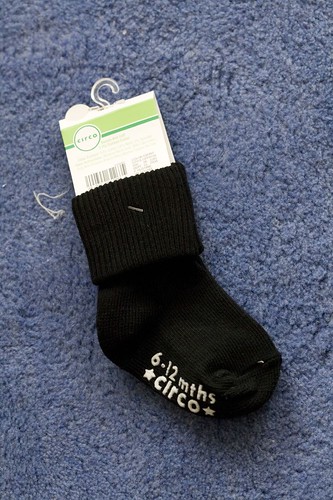
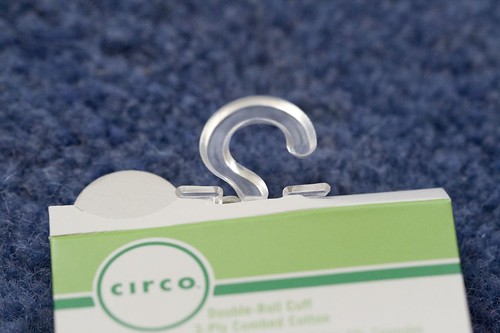
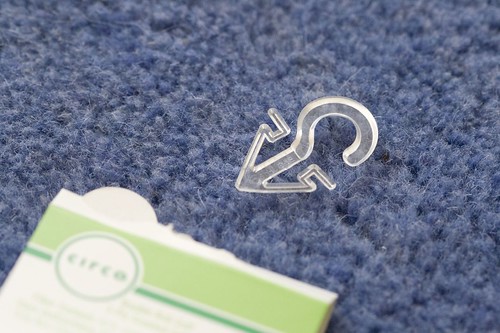
I happened to take my 6-month old to Target this weekend, and we bought him some socks. He was playing with the package and put them in his mouth, and managed to get the little hanger plastic piece out. There’s certainly enough to say about parental responsibility, and not letting the baby get into dangerous things, but until this little plastic piece disappeared (it turns out he dropped it on the floor), we didn’t even give a second thought to the idea that a pair of socks for a 6-12 month old might contain this kind of incredible choking hazard. I’m normally pretty paranoid about this. Didn’t these things used to go all the way across? Is this REALLY the place where Target wants to save a tenth of a cent of plastic? It seems like a lawsuit waiting to happen.

Be careful out there…

Circo Socks Hazardous Packaging

Circo Socks Hazardous Packaging

Circo Socks Hazardous Packaging

Circo Socks Hazardous Packaging

Tags: , , , ,


4/19/2007

Microsoft should release XP for free

Filed under: — adam @ 3:47 pm

It is well known that free products are used more widely than products that people have to pay for. If Vista is so much better, then people will still pay money for it, and having more installations of XP around to keep people using Windows apps instead of switching to Mac or Linux can only be a good thing for Microsoft, whose continued success depends not only on agreements with PC manufacturers, but also on the continued existence of Windows-only software that people need to run. This benefits Microsoft, and will result in more sales of Vista (and subsequent versions), as other software vendors evolve into the same “The XP version is free, but if you want the premium version, you need Vista” pattern. Essentially - XP becomes the shareware limited demo version of Windows, and you pay if you want the full version.

This obviously benefits the consumer, because free is good, and there are plenty of places (VMs, especially), where it would be useful to run XP, but where the current price is cost prohibitive. Making XP free would open up the Windows market to those potential customers.

Anyone who’s switching to Mac or Linux has already made the decision to do it, and isn’t turning back because they can’t run Windows in a VM… because they already can. This would just make everyone’s life easier, and generate a LOT more goodwill for Microsoft than they have now.

Microsoft, despite being ridiculously profitable, is in danger of losing relevance. This is one way to combat that.

Tags: , , , , ,


4/16/2007

New social networking features on Confabb launched today

Filed under: — adam @ 2:41 pm

I’m extremely proud of the Confabb site, and it’s nice to see it evolving past the limited feature set we were able to squeeze in before launch. There’s a LOT more great stuff coming. The development team has been working very hard for the past few months, and a bunch of new social networking features went live today.

From the press release:

New Logged-in Homepage

Log in and check out ‘your new homepage.’ Above ‘your conferences’ is the new ‘your network,’ a bird’s-eye view of bulletin board messages from within your network (more on that below), your online Confabb connections and any messages sent to you by those within the Confabb community. Click on ‘My Account’ to see the full range of search and connection possibilities. Post your own messages for everyone to see on “your bulletin board,” which will be broadcast globally—Confabb pings no fewer than 68 of the major alerting services—or have a one-on-one discussion with other Confabb members. You can also see what others are talking about and invite new people, either from within or outside of Confabb, to join your network.

New Search!

There are two new forms of search on the site (you’ll all remember that the search function was Confabb’s Achilles Heel when we launched). There is now an advanced search for conferences which drills down into multiple parameters such as location, keyword, location, category and when the show date starts and stops. That nullifies one of the biggest knocks we got at launch. People will love it. We’ve also added a “User Search” which lets Confabb users search for and connect with other Confabb community members. Of course that sets us up for connecting people within the community and that’s the best part.

MY Connections (or “buddy lists”)

Just as you keep a list of people with home you correspond daily, the “My Connections” tab is your gateway to the personal contacts you’ve made within the Confabb community–people with whom you’ve connected before and want to stay in touch with going forward. This is your personal network; friends, colleagues and other contacts whose whereabouts and doings you want to follow as they prepare for and an attend events. Attendees can view a list of other conference participants, check out their profiles, invite them into their personal network and email them directly through Confabb’s personal messaging feature.

Personal Messaging

This is the Confabb community’s personal email service. We respect everyone’s right to privacy so messaging within the community is handled by us; simply use the “contact” link to jot a note to the person of your choice and we’ll send the message to the email that person has registered within our system. Responses are handled by us as well so your information is never revealed unless you choose to do that outside of the community.

Media

This is cool. “Media” is just that: everything that interests you from across the web, from text-based articles and links to photos, RSS feeds for breaking information and even full blown videos. The content comes from the web’s leading sources of open information, including Technorati, Google and Yahoo!, Feedster, Flickr and YouTube. Simply click the “Media” tab at the top of the navigation bar and find information on just about anything by searching for the subject’s name or the subject’s tag in the desired content source. The Media tab lets you experience the conference through everyone else’s eyes, and they experience it through content you create, find and share with them.

Bulletin Boards

Confabb now provides all of its users with their own personal blogs, or bulletin boards, from which they can share their thoughts, opinions on the issues and experiences. This is the community member’s space; it’s intensely individual, consisting of the member’s content and comments from their readers. People can also read the musing of others within their network by clicking on the “Bulletin Board Posts within My Network” tab, which shows what others within their network are saying too.

Each board–the individual blog and the personal network bulletin board–are completely searchable by the major search engines. You will build traffic from within the community as well as anyone from around the globe with an interest in what you have to say!

http://www.confabb.com

Tags: , ,


4/14/2007

Google has just bought a lot of browsing history of the internet

I pointed out that YouTube was a particularly valuable acquisition to Google because their videos are the most embedded in other pages of any of the online video services. When you embed your own content in someone else’s web page, you get the ability to track who visits that page and when, to the extent that you can identify them. This is how Google Analytics works - there’s a small piece of javascript loaded into the page which is served from one of Google’s servers, and then everytime someone hits that page, they get the IP address, the URL of the referring page, and whatever cookies are stored with the browser for the domain. As I’ve discussed before, this is often more than enough information to uniquely identify a person with pretty high accuracy.

DoubleClick has been doing this for a lot longer than Google has, and they have a lot of history there. In addition to their ad network, Google has also just acquired that entire browsing history, profiles of the browsing of a huge chunk of the web. Google’s privacy policy does not seem to apply to information acquired from sources other than Google.com, so they’re probably free to do whatever they want with this profile data.

[Update: In perusing their privacy policy, I noted this: If Google becomes involved in a merger, acquisition, or any form of sale of some or all of its assets, we will provide notice before personal information is transferred and becomes subject to a different privacy policy. This doesn't specify which end of the merger they're on, so maybe this does cover personal information they acquire. I wonder if they're planning on informing everyone included in the DoubleClick database.]

Tags: , , ,


Remember when DoubleClick was pretty universally reviled and sued for privacy violations a few years back?

Oh yeah.

http://www.nytimes.com/2007/04/14/technology/14deal.html?ex=1334203200&en=d94eb7f788b32db5&ei=5090&partner=rssuserland&emc=rss


4/13/2007

Cadbury got busted for reducing the size of the Creme Egg and then lying about it

Filed under: — adam @ 3:31 pm

I used to get a Cadbury Creme Egg a year about the same time I had my annual McRib. Since I’ve realized over the course of the past few years that you’re only supposed to eat food, I didn’t know that Cadbury reduced the size of the Creme Egg this year. And then they lied about it! And they blamed it on the increasing size of their consumers (possibly from eating too many Creme Eggs)! And then they got busted on National TV! At least they could have had the dignity to release the “New Creme Egg”, and then release the “Creme Egg Classic” in the smaller form factor when people complained about the new formula.

http://consumerist.com/consumer/cadbury/cadbury-our-eggs-arent-smaller-you-are-bigger-250559.php

Tags: , , , , ,


4/2/2007

The end of DRM is nigh

The iTunes store is about to start selling the entire EMI catalog DRM-free. It’s slightly more expensive, but also higher quality.

This completely destroys the rationale behind having any DRM at all. It can’t be because they’re afraid of the higher quality recordings getting out, because those are the ones they’re releasing without DRM. All that remains is shafting the customer, which is of course all that DRM is actually good for.

http://www.boingboing.net/2007/04/02/itunes_store_will_se.html

Tags: , ,


3/16/2007

ISPs apparently sell your clickstream data

Apparently, “anonymized” clickstream data (the urls of which websites you visited and in what order) is available for sale directly from many ISPs. There is no way that this is sufficiently anonymized. It is readily obvious from reading my clickstream who I am - urls for MANY online services contain usernames, and anyone who uses any sort of online service is almost certainly visiting their own presence far more than anything else. All it takes is one of those usernames to be tied to a real name, and your entire clickstream becomes un-anonymized, irreversibly and forever.

I’ve talked about the dangers of breaking anonymization with leaking keys before:

Short answer: It is not enough to say that a piece of data is not “personally identifiable” if it is unique and exists with a piece of personally identifiable data somewhere else. More importantly, it doesn’t even have to be unique or completely personally identifiable - whether or not you can guess who a person is from a piece of data is not a black and white distinction, and simply being able to guess who a person might be can leak some information that might confirm their identity when combined with something else.

This is also completely setting aside the fact that you have very little direct control over much of your clickstream, since there are all sorts of ways for a site you visit to get your browser to load things - popups, javascript includes, and images being the most prevalent.

Preserving anonymity is hard. This is an egregious breach of privacy. Expect lawsuits if this is true.

http://internet.seekingalpha.com/article/29449

Tags: , , ,


3/14/2007

Google to purge some data after 18-24 months

Filed under: — adam @ 6:33 pm

Well, that’s a nice start. Good for them.

http://blog.wired.com/27bstroke6/2007/03/google_to_anony.html

http://googleblog.blogspot.com/2007/03/taking-steps-to-further-improve-our.html

http://216.239.57.110/blog_resources/google_log_retention_policy_faq.pdf

Tags: , ,


Confabb is hosting the Personal Democracy Forum 2007 site

Filed under: — adam @ 11:39 am

Exciting! — Confabb is hosting the site for Personal Democracy Forum 2007.

The science of politics is changing, and these are the people who are doing interesting things about it.

You can browse information about the conference (news, events, sessions, speakers, and more), and register from the site. You can use your existing Confabb login, if you have one (OpenID is coming, but not yet).

http://pdf2007.confabb.com/

(Disclosure: I’m one of the co-founders of Confabb.)

Tags: , , , ,


The Penny Gap is the difference between free and mostly free

Filed under: — adam @ 11:16 am

Interesting post about the Penny Gap. I think this is directly related to a similar concept which might be called the Unlimited Chasm.

http://redeye.firstround.com/2007/03/the_first_penny.html

The Penny Gap says that if your service is actually free, it will have a much greater uptake than one that is merely very very cheap. Rather than being a smooth curve up the value chain, there’s a quantum shift between “free” and “costs anything”. I think this is largely due to the implicit value factoring of the “cost” (in effort) of the transaction. If you could just wave your hand and pay a penny for something without getting out your credit card number or typing in your password, it seems like this gap would largely disappear.

There’s a similar effect at play when dealing with “unlimited” services. If you have to pay for usage, it takes a lot of mental effort to add up everything you’re paying and make sure you’re not over a certain amount. If you don’t, and have an unlimited plan, that mental effort goes away. Even if the unlimited service is more expensive than you’d pay with metered service, there’s less hesitation to use it because you never have to worry about keeping track of it. I feel like this effect is less prominent on services that give you constant feedback about how much you’ve used. Presumably the extra security of insurance of not ever going above a certain limit has some value to it as well.

Free and unlimited are obviously closely related, mentally and emotionally. I’ll have to think about this some more.

Tags: , , ,


Followup commentary on Windows Vista

Filed under: — adam @ 12:29 am

Perry said “I think you held back too much. Tell us what you really think.”

Okay. I think Windows is rotten to the core and always has been. Between Windows 3.1 and XP, there were no serious contenders. With Win2K and XP, it’s at least had the benefits of:

1) it being reasonably possible to hammer it into sufficient shape to be usable and secure “enough”.

2) running on significantly cheaper hardware.

3) being reasonably open for a closed-source product, and at least focused towards providing a good user experience, and aimed at the needs of the end user.

4) providing a mostly effortless hardware compatibility experience. Most of the things I’ve plugged into my XP box have simply worked, without too much trouble. Sure, I’ve had to install the driver, but there are a number of things where you have to do that with OSX, too.

5) having software exclusives, and existing in the world where virtualization/emulation on other platforms was at the end-user performance level of “barely usable, if you really need it”.

All of that seems to change with Vista and the fun 2007 world it inhabits:

#1 might have been good enough with XP, but I fail to see why none of those lessons have been learned, and we have to do it all over again with a new OS, especially one which otherwise seems to provide marginal benefits.

#2 the hardware requirements for Vista seem like simply an excuse to sell more hardware for overly bloated and inefficient software, because…

#3 they’ve totally sold out to the content industry and everything has been reoriented towards content protection, all of which eats hardware resources and diminishes usability, because of which…

#4 they broke the unified driver model and so we have to start all over again with hardware compatibility, and…

#5 now there are cheaper, better alternatives for running the same software, which actually seem to work this time around.

We’ve known this all along - Unix in any flavor is superior to Windows. We’ve finally reached the complexity point in operating systems where that difference is unmistakable even if you don’t have advanced degrees in Computer Science.

I’ve been a Windows user and defender for a very long time, because of the list of five advantages above. My primary desktop still runs XP. I expect that to be the case until I need to replace it, at which point I’ll probably get a Mac, for the five same reasons. Obviously, I haven’t hit all of the reasons, but this is a big chunk of why I have little interest in Vista. It’s the same reason I got tired of manually assigning SCSI ids to all of my disks. Tinkering is fun. Sometimes, tinkering is fun even when it’s mandatory and things don’t work unless you tinker. But after a while, you just want things to work.

Tags: , , , ,


2/21/2007

It is time for the distinction between Mac software and PC software to go away

Filed under: — adam @ 6:21 pm

I’ve been thinking about the issue of Mac software vs. PC software a lot lately, particularly with the cross-platform beta and coming production release of Adobe CS3.

I’ve only been a recent convert to the Mac, and the thing that was holding me back was that certain software that I absolutely needed was not yet available on the Mac. Until recently, things I needed to do my job wouldn’t run on OS X, or wouldn’t run well, or would run perfectly well under Windows and OS X but would require me to buy another license (and a full price non-upgrade license at that) to run what was essentially the same software as I was running under Windows.

But with the conversion of the Macs to Intel chips and the consequent advent of Parallels (and eventually VMWare Fusion, which is not yet ready for prime time in my limited tryout), this distinction essentially evaporated. I could run all of the great software I wanted natively for Mac, and anything else that wasn’t available or would cost extra for the Mac version I could run under XP on Parallels. Since then, I haven’t bought any new Windows machines. Virtualization technologies existed before, of course, but the difference this time around is that Parallels works.

And now, Adobe, I’m looking squarely at you. Your license permits me to run a copy of CS2 on my desktop (which is still Windows), and one on my laptop (which is OS X). I’m not going to buy another full $1000 copy of CS2 for the Mac, so the question now is this - the license permits me to run it on my laptop, so why are you making me run it under Parallels? You’re letting me preview the beta version of CS3 on the Mac, but now you’re just teasing me, since you’ve said that there won’t be a cross-platform license available for the full version. When CS3 comes out, I’ll have no option but to buy the Windows version. Notwithstanding the fact that I already own the Windows version, that’s the only option that will let me run it on both my desktop and my laptop, there being no way to run OS X in a virtual machine. But that’s a degraded user experience for me, for no gain for you.

So why are we still dealing with this inconvenient fiction?

Here’s my call to arms to all software developers: where you’re making a Mac and Windows version of the same software available and currently require two separate licenses, collapse and simplify. Don’t make me run the Windows version under Parallels. It just makes me love you less, and the extra love goes to Parallels instead. I want to love you more.

Tags: , , , , , , , , ,


1/10/2007

iPhony

Cisco owns the trademark on “iPhone”. Apple was apparently in negotiations to license the term, but had not actually completed doing so prior to the product announcement. Negotations would not seem to be going well, as Cisco has filed a suit against Apple for trademark infringment:

http://newsroom.cisco.com/dlls/2007/corp_011007.html

Tags: , , , ,


11/13/2006

Confabb is a conference portal and social networking service

Filed under: — adam @ 2:13 pm

Over the past six months, in addition to all of the other things going on in my life, including several exciting other projects, I’ve been working as the lead architect for Confabb, a comprehensive conference portal and social networking service. It’s a testament to the magic of rails and modern business practices that we’ve been able to pull this together with an entirely distributed team, some of whom have never met each other, in our spare time, with an outlay of cash measured in hundreds of dollars. On that note, the incredible rails deployment team at EngineYard deserves our unqualified thanks.

Check it out!

http://www.confabb.com

If you’re at all interested in conferences, we should have something interesting for you. On top of the large conference database, we’ve got features to help you track conferences you’re interested in, review and rate conferences and speakers, plus some treats for speakers and conference organizers.

http://www.confabb.com/features

The application has been an interesting ride. It fills a real need, and provides solid, useful features. After 10 years of building CMS and intranet systems for clients, I’ve spent the past few years on viscerally owning the projects I’m working on. This is the first of those launches, but it’s not the last. Stay tuned in the next few months to see what else I’m working on.

Techcrunch covered our launch today:

http://www.techcrunch.com/2006/11/13/confabb-find-track-and-review-conferences/

Tags: , , ,


10/10/2006

Google has your logs (and all it took was a fart lighting video)

The non-obvious side of Google’s purchase of YouTube: Google now has access to the hit logs of every page that a YouTube video appears on, including LOTS of pages that were probably previously inaccessible to them. MySpace pages were probably going to get Google ads anyway, because of the big deal that happened there, but many others weren’t.

Add this to AdSense, the Google Web Accelerator, Google Web Analytics, and Google Maps, and that’s a lot of data being collected about browsing habits, and the number of sites you can browse without sending some data to Google has just dropped significantly.

Previously:

http://www.aquick.org/blog/2006/02/03/detailed-survey-of-verbatim-answers-from-aol-ms-yahoo-and-google-about-what-details-they-store/

http://www.aquick.org/blog/2006/01/30/flickr-pictures-web-beacons-and-a-modest-proposal/

http://www.aquick.org/blog/2006/01/29/whats-the-big-fuss-about-ip-addresses/

http://www.aquick.org/blog/2006/01/27/google-does-keep-cookie-and-ip-correlated-logs/